Day One
A Week on the George Parks Highway

Palmer to Willow: 40 miles.
There’s something perfect about a bike trip that starts at home. No flying to a distant city. No driving to a trailhead. Your garage door opens to the soft rain outside. You wheel the bike out, loaded with food, shelter, clothes. You close the garage door, hop on the bike, and pedal. The same driveway, the same road, that would take you to mundane places every other day, is now taking you on an adventure.
That’s not just car noise humming on the Palmer-Wasilla Highway. That’s the throbbing bloodstream of the borough. Those aren’t just raindrops. Those are the skies replenishing the invasive species below. That’s not just a Fred Meyers parking lot by Lucille Lake in Wasilla. It’s fuel for thousands of households hunting and gathering sausage and beans and toiletries for the week. People living their lives. It’s an adventure to pass among them.
Marcel Duchamp recognized perfection in a urinal and transformed it into a work of art. It should be much easier to recognize a parking lot in the rain and transform it into an adventure.
In college, I got roped into attending a senior piano recital with a group of friends. I forget the pianist’s name. I’ll call him Jack. On that day, Jack introduced me to Chopin.
I didn’t go to recitals voluntarily. Recitals didn’t have guitar solos. But for some reason, my mind opened up to this one. The hands flashed across the keyboard with the intensity and showmanship of Eric Clapton or Carlos Santana. Chopin’s chords glistened. I felt my life change then and there.
I said so to the music major who was sitting next to me. I don’t remember her name either. I’ll call her Diane.
Diane sneered. He made dozens of mistakes. His playing was mechanical. There was no dynamic expression. The whole recital was embarrassing.
And I felt my life change back.
I used to think Diane was the villain in that story. She did kind of deflate the experience for me.
But I think I understand her now. I see her as a young music student, enthusiastically practicing new critical faculties. I imagine her in a piano lesson with her instructor, maybe working on the same Chopin. I imagine a world opening up before her as the instructor demonstrates a phrase. She hears it as it should be, and it must feel wonderful. But anything less than that must have hurt.
I think my guitar teacher deserves hazard pay for having to hear my clumsy playing.
I’ve become a perfectionist in my old age.
I see perfection when Jack struggles with Chopin, doing the best that he can.
I see perfection in Diane’s finely-tuned ear, her ability to hear the perfect Chopin hiding behind the lesser vibrations in the air. And I see the joy in her newly developed critical faculties, like the ache of new muscles after a long training period.
I even see perfection in myself, a naïve young student who came to the concert ready to fall asleep, skeptical about classical music, but who opened himself up to a new experience.
I’m riding the Parks Highway from Wasilla toward Fairbanks. It should take me about a week to get there. I don’t mind the rain. I’ve got good rain gear. There’s a copy of Plato’s Gorgias in my panniers, which I’ve started reading. I probably won’t get much reading done. But I’m about 60 pages in, so I have ideas to chew on while riding.
Gorgias is a rhetorician, which means he teaches students how to be persuasive. He thinks rhetoric is a teachable skill, and that learning that skill gives students the power to persuade. There’s some confusion as to whether rhetoric is morally neutral. Gorgias seems to hope that there’s a moral element to his lessons – that persuasion coexists with a moral sense of how to use those skills. Socrates disavows him of that notion.
Socrates doesn’t think very highly of rhetoric. To him, rhetoric is contemptible It’s a “knack” “for producing pleasure and gratification.”
Rhetoric is a polluted version of the more perfect “statesmanship.” So far in my reading, he hasn’t defined statesmanship. But I think it’s the ability to sit with people of diverse interest and carve out common ground without resorting to killing a bunch of innocent citizens. So I can see that it involves more than mere skill or technique.
A rhetorician, to Socrates at least, is a flatterer.
That’s the word the translator uses. But Socrates is using the word in an odd way. Flattery to Socrates is not just buttering up a person’s ego. It’s anything aimed at pleasure and gratification. So, a doctor might heal with medicine but a cook flatters with “mere” cookery. A doctor succeeds when someone gets healed. A cook succeeds if the food tastes good, even when it’s not nutritious.
Like the doctor, a statesman combines words and action to accomplish a tangible good, but an influencer just pulls together pretty words and images to flatter and convince.
Socrates had no clue what was coming in the centuries ahead. For him, rhetoric was limited to a few public spaces. Advertising as we know it didn’t exist. According to the New York Times, the model of “omnipresent marketing” was the bright red “Coca Cola” icon that suddenly appeared on “calendars” and “mirrors” and billboards everywhere. Coca Cola appeared in the 1880s. Socrates lived in a completely different world.
Today, influence is ubiquitous in a way that would have baffled Socrates. Influence is in the air. We don’t persuade with argument. We sell things and ideas by making them familiar.
(Well, that’s not completely new. Religious icons have been with us for thousands of years. They might be a kind of proto-advertising.)
___
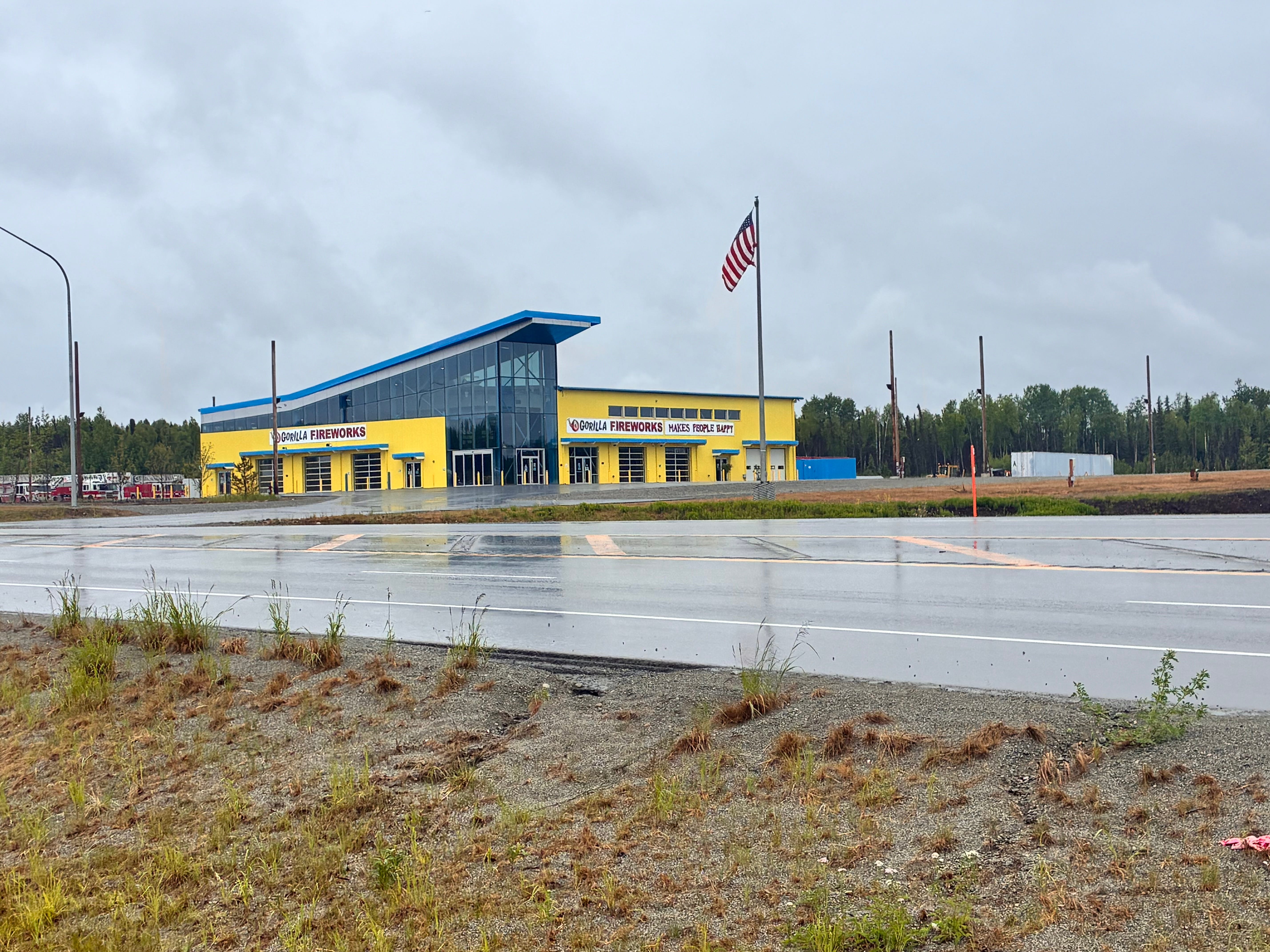
The last time I biked through Houston, Alaska, there were two big fireworks stands. One was Gorilla Fireworks. I forget what the other one was called. I think one bought out the other. Google says there are more than that, but I didn’t see them on the Parks Highway.
To me, the perfect way to sell fireworks is out of a trailer on the side of the road, maybe with an inflatable Gorilla or some such. There’s a sense of scale about that trailer. Fireworks are in their correct cultural niche. Just human beings making their sale, with a little bit of street hustle, a little bit of the circus. That’s how I remember Gorilla Fireworks.
But at some point, Gorilla Fireworks lost its punk. They’re corporate now. Their new, bright yellow building looks like a fire station, which is fitting, I suppose, but the building gives them too much authority. Circus hustle and corporate hustle are both about greed. They share that. But greed from a trailer with an inflatable gorilla is different than greed from behind a large glass window. This new building is too official, too settled, to authoritative.
And the fire trucks in the background are a reminder that this is fire season. That’s why I won’t complain about the weather just because of a little rain. We need that rain. The rain is perfect.
But the rain stops before I reach my destination for the night. I sleep in a dry cabin on some friends’ property near Willow. My friends are very private people, so I won’t share their names or their location. These are real Alaskans who know the trails, know how to build an outhouse, know how to heat their home and survive in -40 degree winters, or travel safely in bear country in the summer. They have me over for dinner and warm conversation.
I sleep comfortably in my sleeping bag on the bed in their cabin, I leave late the next morning after a generous and hearty breakfast.
What philosophy you're chasing my mind with! Lovely writing.
I'm enjoying the ride--and the reflections!